The green baize of a card table, the rhythmic click of a spinning wheel, and the palpable silence that falls over a room just before a card is flipped—these are not merely elements of a game. In the world of storytelling, they are the building blocks of tension. For centuries, the casino and the act of gambling have served as one of the most potent metaphors in human culture. From the smoke-filled salons of 19th-century Russia to the neon-drenched corridors of modern-day Las Vegas, the theme of high-stakes risk has fascinated writers, directors, and audiences alike.
But why does the gamble hold such a tight grip on our collective imagination? To understand this, we must look beyond the flashing lights and the chips. We must delve into the psychology of the “all-in” moment and see how it reflects our deepest fears, desires, and our complicated relationship with Fate.
Long before the first film camera rolled, classical literature recognized that a person’s behavior at a gambling table revealed more about their character than a thousand pages of dialogue. In the 19th century, particularly in European and Russian literature, gambling wasn’t just a hobby; it was a philosophical battleground.
Perhaps no writer captured the destructive, intoxicating nature of risk better than Fyodor Dostoyevsky. In his semi-autobiographical novella The Gambler, we see the casino not as a place of entertainment, but as an altar of obsession. For the protagonist, Aleksey Ivanovich, the roulette wheel isn’t just about winning money—it’s about the sensation of standing on the edge of a precipice.
Literature uses gambling to explore the concept of determinism vs. free will. When a character places their entire fortune on a single spin, they are essentially challenging the universe to notice them. Dostoyevsky masterfully portrays how the “risk” becomes a drug that replaces love, career, and even self-preservation. This literary tradition established the “Gambler” as a tragic archetype: someone who seeks to master Fate but is ultimately consumed by it.
Similarly, Alexander Pushkin’s The Queen of Spades weaves the theme of risk into the supernatural. The story of Hermann, who becomes obsessed with a secret sequence of cards, highlights a recurring theme in pop culture: the belief in a “system” or a “secret.” This reflects a universal human trait—the desire to find order in chaos. Literature tells us that while the odds are mathematical, the feeling of gambling is purely emotional and often bordering on the mystical.
As the 20th century dawned, the casino moved from the pages of novels to the silver screen. Cinema added a vital layer to the theme of risk: Visual Atmosphere.
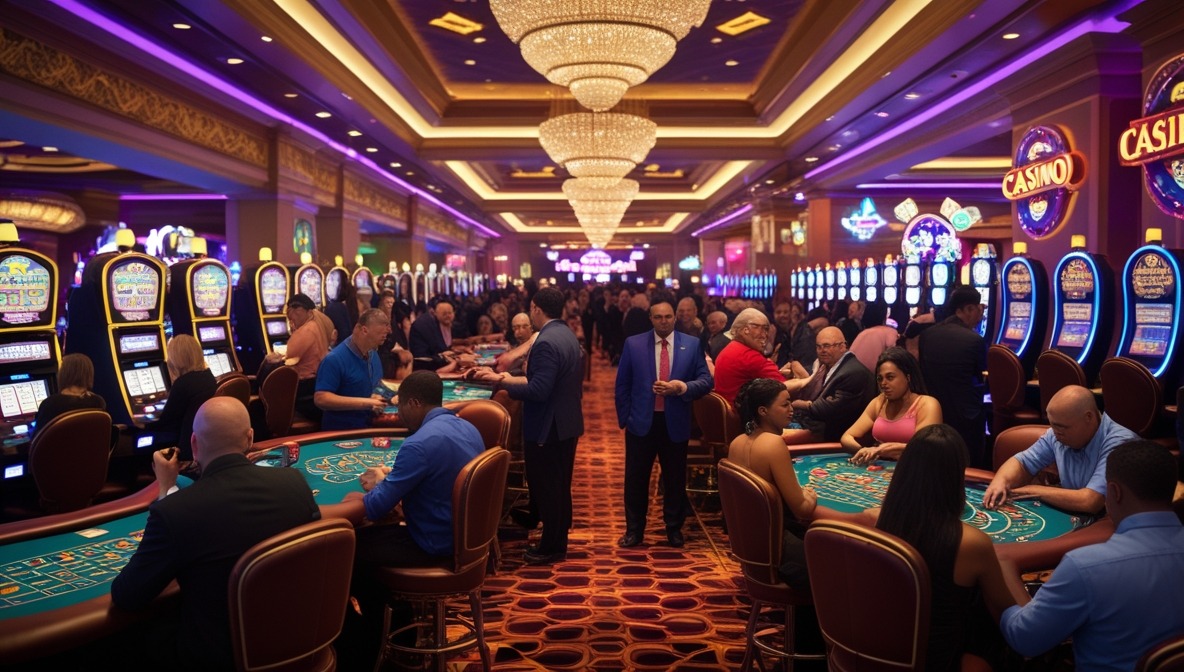
In film, the casino is rarely just a setting; it is a character. In the works of directors like Martin Scorsese, the casino serves as a glittering microcosm of the American Dream—and its eventual decay. The visual contrast between the “front of house” (glamour, lights, wealth) and the “back of house” (violence, calculation, cold reality) provides a perfect backdrop for exploring human greed and ambition.
The cinematic casino is a place where social barriers melt away. A billionaire and a drifter can sit side-by-side, governed by the same impartial rules of the deck. This inherent drama is a screenwriter’s goldmine. The stakes are visible, the rules are understood by the audience, and the outcome is immediate.
Cinema also gave birth to the “Professional” archetype. Think of the classic spy thrillers where the baccarat table is the site of a psychological duel. Here, risk is a measure of masculinity and composure. The protagonist doesn’t just play the cards; they play the opponent. The message is clear: in a world of uncertainty, the person who can remain calm while risking everything is the ultimate hero.
This “glamorization” of risk serves a specific narrative purpose. It represents the ultimate form of confidence. When we watch a hero bet it all, we aren’t just watching a game; we are watching a person who refuses to be intimidated by the possibility of failure.
To write a truly deep analysis of this theme, we have to ask why the audience finds risk so compelling. Psychology offers several insights that creators have been exploiting for generations.
Neurologically, the human brain reacts to a “near miss” almost as strongly as it does to a win. In movies, when the roulette ball bounces in and out of the chosen number, the audience feels a physical jolt. This tension creates an engagement that few other plot devices can match. It is the essence of suspense.
Most people live lives governed by budgets, schedules, and incremental progress. The casino represents the “Quantum Leap”—the idea that in a single second, your life could change irrevocably. Whether it’s the rags-to-riches story or the sudden fall from grace, the extreme volatility of the casino provides a narrative “shortcut” to high drama.
At its core, gambling is a metaphor for life itself. Every major decision—moving to a new city, starting a business, falling in love—is a gamble. By watching characters navigate the literal risks of a casino, the audience processes their own anxieties about the figurative risks in their lives.
The popularity of the theme is sustained by a set of recurring characters that audiences recognize and relate to:
The Tragic Addict: Reminding us of the dangers of losing control (e.g., the grit of 70s cinema).
The Mathematical Genius: The underdog who uses intellect to “beat the house,” representing the triumph of human logic over cold probability.
The High Roller: The embodiment of excess and the power of “disposable” wealth.
The Honest Dealer: The impartial observer of human folly, often acting as the narrator of the story’s moral lesson.
In recent years, the representation of gambling in pop culture has shifted. We see a move toward “the heist” and “the grind.” Modern stories often focus on the mechanics of the industry or the technical brilliance required to navigate the modern world of probability.
However, the core remains the same. Whether it is a high-stakes poker game in a sprawling thriller or a quiet scene in a classic novel, the “risk” is a tool used to strip characters down to their essence. When the chips are down, masks fall off. Cowards become brave, and the arrogant are humbled.
From a content standpoint, the intersection of “culture” and “gambling” is a high-authority topic because it bridges the gap between entertainment and philosophy. People searching for information on games often stay for the stories behind them.
The keywords that drive this interest—psychology of gambling, casinos in movies, literary themes of risk—all point toward a desire to understand the “Human Element.” In an era of algorithms, the raw, unpredictable nature of a human being making a high-stakes choice is more captivating than ever.
The theme of risk remains popular because it is the most honest reflection of the human experience. We are all, in some way, players at a table we didn’t choose, dealing with cards we can’t always control. Cinema and literature simply provide a heightened, more aesthetic version of that reality.
The casino in mass culture isn’t just about money. It’s about the thrill of the unknown. It’s about the moment of transition between “what is” and “what could be.” As long as humans are fascinated by fate and captivated by the “what if,” the casino will remain the most compelling stage in the world of stories.
| Era | Primary Medium | Key Theme of Risk |
| 19th Century | Classic Literature | Moral decay, fate, and the supernatural. |
| Mid-20th Century | Film Noir / Thrillers | Masculinity, coolness, and psychological duels. |
| Late 20th Century | Neo-Noir / Drama | The American Dream, corporate greed, and systemic risk. |
| 21st Century | Digital Media / Heist Films | Logic, “beating the system,” and the technicality of probability. |
This enduring presence in our culture ensures that the imagery of the casino—the cards, the wheels, the stakes—will continue to evolve, reflecting our changing society while staying rooted in our ancient fascination with chance.
Preview Article
The Architecture of Temptation
Written by
Daniel King
Deep research and a pinch of creativity - these are my secret ingredients in online casino reviews I serve to my readers!
Find Topic-Related Posts On Our Blog