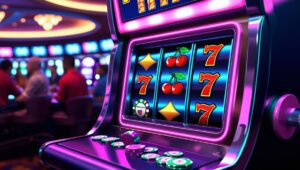
For decades, the popular image of a gambler was a solitary figure, hunched over a slot machine in a dimly lit corner or a stone-faced poker player hidden behind dark glasses. But if you walk into any major gaming floor today—or log into a high-end digital platform—you’ll realize that the “lonely gambler” is a myth.
While the allure of a life-changing win is the hook that gets people through the door, it isn’t necessarily what keeps them there. For a significant portion of the global gaming community, the casino has reclaimed its historical role as a “Third Place”—a social environment outside of home and work where people gather to connect, share experiences, and feel part of a collective.
Sociologist Ray Oldenburg coined the term “The Third Place” to describe locations where people spend time between their first place (home) and their second place (work). These are spots like coffee shops, libraries, and parks. In the 21st century, casinos have aggressively evolved to fill this role.
The shift hasn’t been accidental. Modern casino architecture has moved away from the “labyrinth” style—meant to trap players inside—toward open-concept designs with integrated lounges, bars, and communal viewing areas. The goal is to create a “vibe.” When you see a group of friends cheering around a craps table, they aren’t just celebrating a profit; they are participating in a high-energy shared ritual.
For many, the cost of the “buy-in” is essentially the price of admission for a night of entertainment, comparable to a concert ticket or a high-end dinner. The “win” is the social capital gained through the experience.
Human beings are hardwired for tribal connection. Psychologically, the act of “rooting” for someone else or having a group root for you triggers the release of oxytocin—the “bonding hormone”—alongside the usual dopamine rush of the game itself.
The craps table is perhaps the purest example of social gambling. Unlike many other games where players compete against each other, in craps, most of the table is usually betting with the “shooter.” This creates an “us-versus-the-house” dynamic. When the dice roll in the table’s favor, the collective roar is a powerful social glue. This sense of belonging is a primary motivator for casual players who might not even fully understand the complex odds but want to be part of the celebration.
Even slots, traditionally the most solitary of games, have undergone a social revolution. Manufacturers now design “community slots” where players sit in a bank and can trigger shared bonus rounds. If one person hits a special feature, everyone at the bank gets a piece of the action. This transforms a solo activity into a team sport, fostering conversation between strangers who are now invested in each other’s success.
There was a time when online gambling was criticized for being isolating. However, technology has pivoted to prioritize the human element. The “Social Casino” and “Live Dealer” sectors are currently the fastest-growing segments of the industry precisely because they solve the loneliness problem.
Live dealer games are not just about seeing a real person flip cards; they are about the chat box. In a typical live blackjack or roulette session, the dealer greets players by name, responds to jokes, and acknowledges wins. Players, in turn, chat with each other. For someone living in a remote area or a senior citizen seeking companionship, these digital rooms serve as a vital social outlet.
Real-Time Banter: Modern streaming tech allows for sub-second latency, meaning the conversation is as fluid as if you were sitting at a physical table.
The “Lobby” Culture: Many players log in just to watch the high-stakes action and chat with the community, without placing a single bet. It’s the digital equivalent of “people-watching” at a luxury resort.
The rise of slot tournaments has added a competitive, social layer to the spinning reels. Leaderboards, “bragging rights,” and the ability to see where you rank against your peers introduce a social hierarchy and a sense of achievement that goes beyond the monetary payout.
Data suggests that different age groups seek different social returns from their casino visits.
The “Silver” Gamers (60+): For many retirees, the local casino is a safe, climate-controlled environment where they are known by name. The social aspect here is about routine and recognition. The “win” is a friendly chat with the staff and a sense of being “out in the world.”
The Millennials and Gen Z (21–40): This demographic is less interested in traditional “grinding” at a machine. They want “spectacle.” They are the reason for the rise of “stadium gaming”—huge screens with multiple games and DJs—where the atmosphere is more like a nightclub than a gambling hall. For them, gambling is a background activity to the social “hang.”
Industry experts are increasingly viewing gambling not as a transaction, but as a service. When a patron pays $100 and plays for three hours, even if they walk away with $0, they have “purchased” 180 minutes of excitement, social interaction, and environmental stimulation.
If the person felt respected, entertained, and socially engaged, they view that $100 as money well spent—the same way they would view a $100 steak dinner. This “value-per-hour” metric is becoming more important to players than the “return-to-player” (RTP) percentages.
Interestingly, the social aspect of gambling can also serve as a protective factor for responsible play. In a community setting, peers and staff are more likely to notice when someone’s behavior changes.
Social Accountability: When gambling is a shared activity, there is an inherent “check and balance” system. Friends look out for friends, and the visible nature of the play prevents the “tunnel vision” that often leads to problematic behavior in isolation.
Dealer Interaction: Professional dealers are trained not just to run games, but to read the room. A dealer who knows their regulars can often spot signs of distress or fatigue far earlier than an automated system.
We are on the cusp of the next great social leap: Virtual Reality (VR) casinos. Imagine putting on a headset and walking into a digital lobby where you see the avatars of your friends from across the globe. You can walk to the bar, “sit” at a table, and use hand gestures to communicate.
This isn’t just about gambling; it’s about presence. The “spatial” social aspect—the feeling of being in a room with others—is the final frontier in making digital play as emotionally satisfying as the physical casino experience.
While the “Big Win” will always be the headline, the “Small Wins”—the shared laughs, the high-fives with strangers, and the feeling of belonging to a community—are what truly sustain the industry.
In an increasingly digitized and often lonely world, the casino floor remains one of the few places where people from all walks of life sit side-by-side, united by the simple, ancient human thrill of “seeing what happens next.” It turns out that the greatest prize a casino can offer isn’t found in a vault; it’s the person sitting in the chair next to you.
Preview Article
Why Your Brain Perceives a Close Loss as a Stimulus to Continue
Written by
Daniel King
Deep research and a pinch of creativity - these are my secret ingredients in online casino reviews I serve to my readers!
Find Topic-Related Posts On Our Blog